For members of the Ghanaian diaspora, the decision to invest back home has always carried two layers of meaning. There is the emotional pull — the desire to keep a foothold in the place that shaped your family’s story. And there is the financial calculation — where, exactly, does that capital work hardest?
In 2026, both answers are converging on the same square kilometre of Accra: Airport Residential. Long known as the address of choice for diplomats, multinational executives, and senior officials, this district has quietly become something else entirely — one of the most resilient, liquid, and USD-relevant property markets in West Africa. For diaspora investors in the US, UK, and Canada looking to deploy capital with both heart and head, it deserves a closer look.
A Neighbourhood Built for Permanence
Airport Residential’s story begins with its name. Developed in the decades after independence to house airline staff, diplomats, and senior civil servants, the area grew up around Kotoka International Airport and the cluster of embassies, NGOs, and Grade-A offices that followed.
That foundation hasn’t gone anywhere — it has simply been built upward. Over the past decade, the low-rise bungalows that once defined the neighbourhood have steadily given way to vertical, mixed-use developments: glass-fronted residential towers with concierge services, underground parking, and rooftop amenities, sitting alongside a shrinking number of legacy properties on large plots.
What hasn’t changed is the tenant base. Airport Residential remains the default address for corporate relocations, diplomatic staff, and international organisations operating in Accra — a structural source of demand that most neighbourhoods simply don’t have access to.
The Numbers Diaspora Investors Are Watching
Ghana’s broader economic picture provides useful context. GDP growth came in at 5.7% in 2024, with growth expected to stabilise in the 4–5.8% range through 2025 and 2026 as fiscal reforms continue — a backdrop that has kept investor confidence firm despite global headwinds.
Within that economy, Airport Residential has carved out a distinct identity. It isn’t necessarily the fastest-appreciating neighbourhood in Accra, nor the highest-yielding on paper. What it offers is something rarer: low vacancy, a structural demand floor, and pricing that is effectively USD-denominated — a meaningful hedge for investors earning and saving in dollars, pounds, or Canadian dollars.
A few figures worth sitting with:
- Long-term rental yields for well-positioned serviced one- and two-bedroom apartments in the area typically run 7–8% gross, broadly in line with the strongest corridors in the city.
- Some high-performing developments in Airport Residential have recorded 70–90% price appreciation over five years, with analysts projecting continued annual growth in the 8–12% range through the late 2020s.
- Prime residential units in the area were trading at roughly USD 1,400–1,800 per square metre in early 2026 — among the highest per-square-metre values anywhere in Ghana.
- For short-let and serviced apartments catering to corporate and diplomatic tenants, professionally managed units have reported gross monthly income in the USD 3,000–4,000 range, with occupancy commonly cited between 70–80%.
None of this should be read as a guarantee — real estate markets move, and individual outcomes depend heavily on the specific building, unit, and management quality. But taken together, the data paints a picture of a market where capital preservation and income generation are working in tandem, in a currency diaspora investors don’t have to worry about converting at unfavourable rates.
Scarcity Is the Strategy
Perhaps the most important fact about Airport Residential in 2026 is the simplest: there isn’t much land left.
The neighbourhood is, for all practical purposes, built out. New supply going forward will come almost entirely from redevelopment and vertical densification — knocking down or repurposing older structures — rather than from greenfield development. That’s a fundamentally different supply picture from emerging districts further from the centre, where land is still abundant and prices can be diluted by a wave of new competing projects.
At the same time, demand keeps widening. Ghana’s housing deficit has been estimated at around 1.8 million units, with only a few thousand new units added in Accra in a typical year against an estimated need of roughly 200,000 annually nationwide. In the premium segment specifically — Airport Residential, Cantonments, and a handful of comparable districts — diaspora-driven demand is consistently described as outpacing the supply of well-built, professionally managed product.
Put simply: the gap between what diaspora buyers want and what’s available isn’t closing. For investors thinking in five- and ten-year horizons, that scarcity is the thesis.
Buying From Abroad: What You Need to Know Before You Sign
For diaspora investors, the practical and legal mechanics of buying matter just as much as the market story. A few essentials:
Your citizenship status determines your lease term. Ghana operates a predominantly leasehold land system. If you are a Ghanaian citizen — including dual citizens — you can hold property under a 99-year renewable leasehold, which functions, in practice, much like permanent ownership. If you are a non-Ghanaian national, including diaspora members who have naturalised elsewhere and no longer hold Ghanaian citizenship, you’re generally limited to 50-year renewable leaseholds under Article 266 of the 1992 Constitution and the Land Act, 2020 (Act 1036). An increasing number of diaspora members are exploring dual citizenship pathways specifically because of how it simplifies long-term property holding — it’s worth discussing with a qualified immigration attorney as part of your planning.
Due diligence is non-negotiable. Before any purchase, a full Lands Commission search should confirm clear title, check for encumbrances, and verify zoning. Working with a developer that maintains transparent, registered documentation — and that can walk you through this process remotely — removes a significant amount of the anxiety that has historically deterred overseas buyers.
Financing is more accessible than many assume. A number of Ghanaian banks now offer diaspora-focused mortgage products to non-resident buyers, including US, UK, and Canadian citizens, with approval driven largely by documentation quality and the strength of the property’s title rather than nationality alone.
Remote buying is now standard practice. Virtual tours, digital documentation packages, and structured payment plans mean you can move from first enquiry to signed agreement without needing to be on the ground in Accra — though many investors choose to visit before completion simply to see the development and the neighbourhood for themselves.
More Than an Asset: A Home to Return To
It’s worth pausing on something the spreadsheets don’t capture. For many in the diaspora, a property in Airport Residential isn’t purely an investment line item — it’s a base for the trips home, a place for ageing parents to be near family, a future retirement plan, or simply an anchor that keeps the next generation connected to Ghana.
That dual identity — disciplined investment and personal legacy — is precisely what makes Airport Residential different from a purely speculative play in an unfamiliar market. You’re not just buying exposure to Accra’s property cycle. You’re buying a address with history, a community of neighbours who understand exactly what you’re building, and a place that will still matter to your family in twenty years, regardless of where the market happens to be at any given moment.
Why Grand Mirage
Grand Mirage was conceived for exactly this kind of buyer — someone who wants the financial discipline of a well-located, professionally managed asset, alongside the emotional weight of a true family residence.
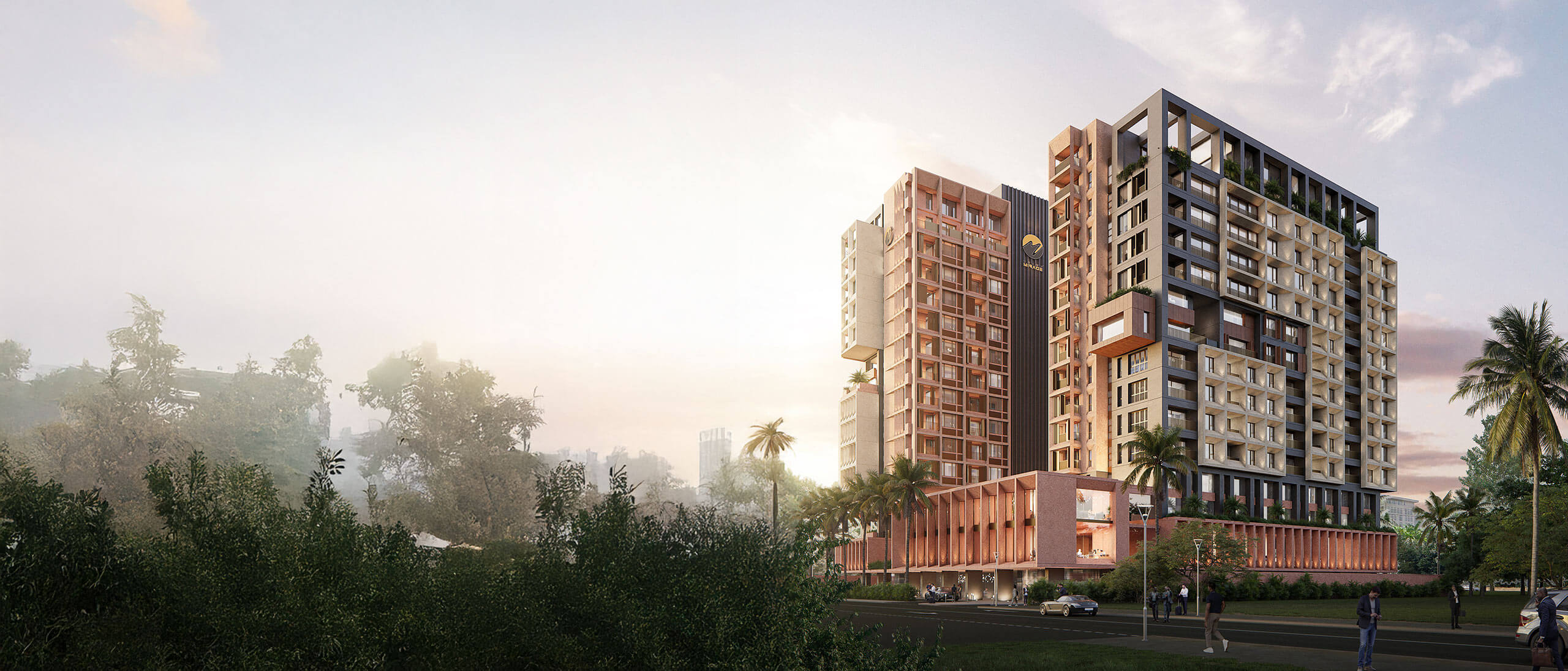
Set in the heart of Airport Residential and developed by Yagmur Group, Grand Mirage brings together considered architecture, premium finishes, and the kind of long-term build quality that diaspora investors increasingly cite as their top priority when evaluating developers from a distance. Every detail — from the materials chosen to the way each residence is laid out — is designed around a simple idea: this should feel like home the moment you walk in, whether that’s once a year or every day.
For an investor balancing a portfolio across continents, that combination of location, craftsmanship, and developer credibility is difficult to replicate elsewhere in Accra.
Your Next Step
Airport Residential’s position — scarce land, structural demand, USD-relevant pricing, and a deep emotional resonance for the diaspora — makes it one of the few neighbourhoods in West Africa where the investment case and the personal case point in the same direction.
If you’re exploring what that could look like for your own portfolio, we’d welcome the conversation. Schedule a private consultation with the Grand Mirage team to discuss available residences, payment structures, and what the buying process looks like from wherever you are in the world.
This article is intended for general informational purposes and does not constitute legal, tax, or financial advice. Prospective investors should consult qualified Ghanaian legal and financial professionals before making any property purchase decisions.